
The UK sat nav driving test lasts around 20 minutes, but examiners mark safe decisions, not perfect directions. Practice with mock drives before test day.
Driving Shoes for UK Learners: Thin Soles, Test Day Checks
Thin-soled trainers or dedicated driving loafers are the best choice for driving, because they let your foot feel the pedal rather than guess at it. Models such as the PUMA Speedcat or a simple leather driving loafer strike the right balance of grip, flexibility and control. Whatever you pick, the Highway Code is clear that your footwear must never stop you operating the controls properly.
TL;DR:
- Test shoes while seated with gentle brake pressure; the heel should stay secure, the toes should remain free, and your foot should move naturally.
- For long drives, choose cushioning beneath the heel, not the ball of the foot; thick aftermarket insoles can raise your foot and dull pedal feedback.
- Wet suede loses grip and holds water; choose leather or trainers with rubber soles in winter, and wipe mud or oil from the soles before driving.
- FIA certified racing shoes are for track days, where fire resistance and a secure fit matter; ordinary road drivers do not need certification.
Table of Contents
- 1. Shortlist: recommended driving shoes and why each work
- 2. What makes a driving shoe different from ordinary footwear
- 3. How to choose driving shoes: fit, features and checks before buying
- 4. Shoe types and best use cases for different driving styles
- 5. Caring for driving shoes and small adjustments to improve pedal feel
- 6. Instructor note: what driving instructors recommend you wear for lessons and tests
- 7. Why footwear matters more than most learners expect
- Another option: prepare for lessons with Connect Driving School
- FAQ
- Sources
1. Shortlist: recommended driving shoes and why each work
Before buying anything, it helps to see how different styles stack up against each other. The list below mixes everyday trainers, classic loafers and one track-focused option, covering most budgets and driving situations.
- PUMA Speedcat: A long-standing favourite in motoring circles, the Speedcat’s low-profile rubber sole and rounded heel give sharp pedal feedback while still looking fine off the car. It suits daily commuters and classic car owners alike, and UK retailers such as Amazon list it in the £50 to £80 range depending on colourway.
- Piloti Shift: Another name regularly cited by motoring writers for its thin sole and motorsport pedigree, the Shift is built specifically with pedal feel in mind rather than adapted from a general trainer design.
- Classic leather driving loafer: The moccasin-style loafer with a rubber pebble sole remains a sensible pick for anyone wanting smart-casual looks with genuine pedal sensitivity, particularly for classic car enthusiasts who want period-appropriate style.
- Low-profile running trainers: Not every trainer works, but a minimalist running shoe with a thin, flexible sole gives similar benefits to a dedicated driving shoe at a lower price point, often under £60.
- Slip-on canvas trainers: Lightweight and cheap, these suit short city journeys where comfort and quick on-off convenience matter more than long-distance support.
- Desert boots with a thin sole: A smart option for commuters who walk between the car and the office, provided the sole stays thin enough at the ball of the foot to avoid dulling pedal feel.
- FIA-rated racing shoes: Reserved for track days, these certified shoes prioritise fire resistance and secure fit over everyday wearability, and specialist guidance notes that most road drivers do not need this level of protection.
- Driving-specific hybrid trainers: Several footwear brands now blend trainer styling with a driving shoe’s rounded heel and thin sole, aimed at drivers who want one shoe for both the commute and the school run.
2. What makes a driving shoe different from ordinary footwear
A driving shoe is not just a trainer with a steering wheel on the box. The differences come down to a handful of design details that affect how precisely you can control the car.
- Sole thickness: A sole that is too thick dulls feedback and can snag under the pedal; one that is too thin offers little protection on a long drive, so a moderate, firm sole strikes the right balance.
- Heel shape: A rounded heel cup lets your foot pivot smoothly between the accelerator and brake, which is one reason the Speedcat’s heel design is repeatedly praised in specialist write-ups.
- Rubber compound and tread: A softer rubber with a shallow, even tread grips better on wet or oily pedal surfaces than a deep, chunky outdoor tread.
- Flexibility: A shoe that flexes naturally at the ball of the foot allows the small ankle movements needed for heel-and-toe technique or gentle brake modulation.
- Casual versus certified: Everyday “driving style” shoes are built for comfort and feel, while certified racing footwear meets standards such as FIA 8856-2018 for fire resistance, a level of protection that specialist sources note is unnecessary for ordinary road driving.
Pro Tip: Press your thumb into the sole at the ball of the foot; if you can feel the shape of your thumb through the rubber, the sole is thin enough to transmit pedal pressure accurately.
3. How to choose driving shoes: fit, features and checks before buying
Picking the right pair is less about brand names and more about how the shoe behaves once you are sat down with your foot on a pedal.
- Try the seated fit test: Sit in a car seat, or use a pedal mock-up in-store if one is available, and press through the ball of your foot as if braking gently; the shoe should move with your foot, not against it.
- Check sole stiffness by hand: Flex the shoe lengthways; a slight bend is good, but a sole that folds in half or barely bends at all both make smooth pedal transitions harder.
- Weigh up materials: Leather resists light rain and holds its shape, suede feels softer but struggles in wet weather, and synthetics are often the most breathable and easiest to clean.
- Get the sizing right: A snug heel with room to wiggle your toes avoids slippage on the pedal; half a size down from your usual trainer fit often works better for driving shoes with a tighter heel cup.
- Think carefully before adding insoles: A thin, flat insole can improve comfort on long drives, but a thick, cushioned aftermarket insole raises your foot and can mute the pedal feedback the shoe was designed to give.
- Set a sensible budget: Expect a moderate price range for decent trainers or boat shoes, a higher range for quality leather loafers or Speedcat-style driving trainers, and more for leather craftsmanship or racing certification.
4. Shoe types and best use cases for different driving styles
Different driving patterns call for different priorities, and matching the shoe to the journey matters more than chasing a single “best” model.
- Everyday commuting: Low-profile trainers or slip-on canvas shoes work well here, since you want quick comfort and a sole thin enough for precise pedal work without thinking about it.
- Long-distance driving: A slightly more cushioned loafer or hybrid trainer helps on motorway stints, as long as the extra padding sits under the heel rather than the ball of the foot where pedal feel matters most.
- Classic cars: Leather driving loafers or suede boat shoes suit the period styling many classic car owners want, while still keeping the thin, flexible sole that preserves control on narrower, older pedal boxes.
- Track days and high-performance driving: This is the one setting where FIA-rated racing shoes earn their keep, since fire-resistant materials and a secure fit matter once lap times and higher risk come into play.
5. Caring for driving shoes and small adjustments to improve pedal feel
A driving shoe only performs well while its sole and structure stay in good condition, so a bit of care goes a long way.
- Clean leather and suede regularly: Wipe leather with a damp cloth and conditioner every few weeks, and brush suede with a dedicated suede brush to lift dirt without flattening the nap.
- Keep soles free of contaminants: Oil, mud or gravel stuck to the sole reduces grip on the pedal, so a quick wipe before getting in the car is worth the ten seconds it takes.
- Watch for worn pedal contact points: Once the sole at the ball of the foot feels smooth or thin enough to lose grip, it is time to consider resoling a quality pair or replacing a cheaper one.
- Break shoes in gently: New leather can feel stiff for the first few drives, so wear them around the house briefly before a long journey rather than discovering discomfort on the motorway.
- Adjust for wet seasons: Swap suede for leather or rubber-soled trainers in winter months, since wet suede loses grip and holds water against the sole.
Pro Tip: Keep a spare pair of driving shoes in the car during winter; swapping out of wet, muddy footwear before you set off protects both your pedal grip and your car’s carpets.
6. Instructor note: what driving instructors recommend you wear for lessons and tests
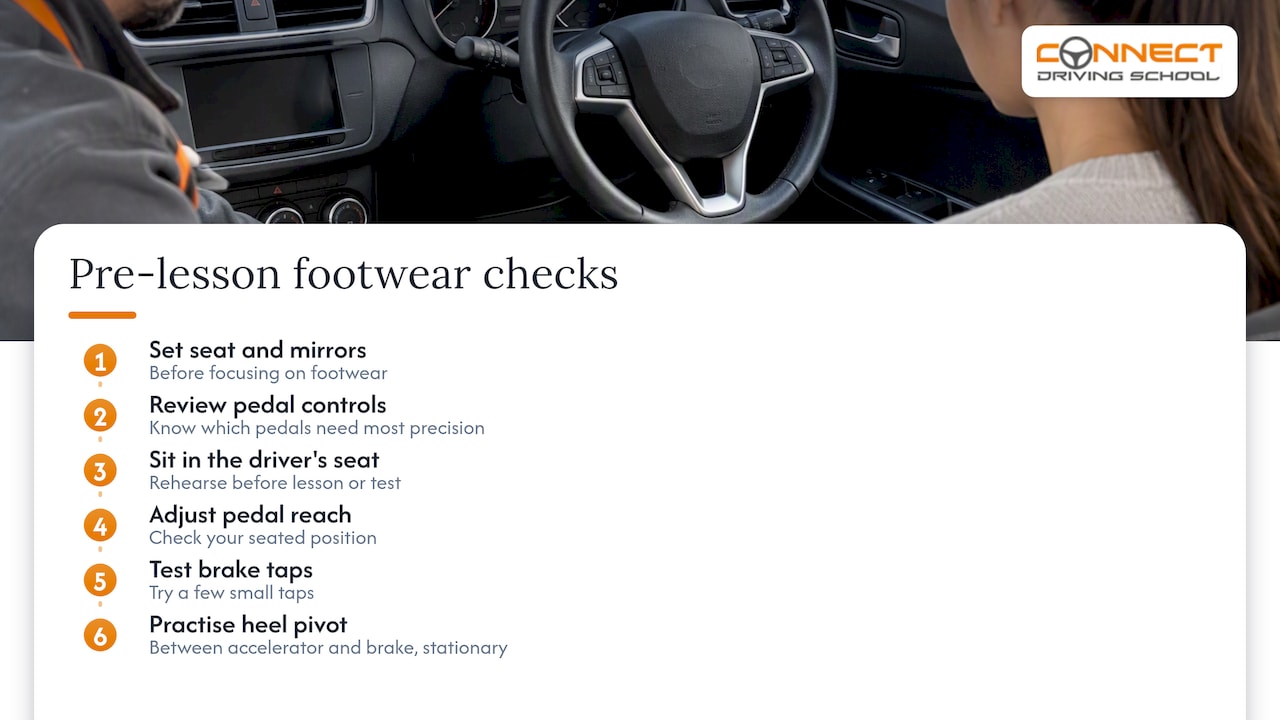
Before a lesson or test, a quick seated rehearsal tells you more than standing in front of a mirror ever will. Sit in the driver’s seat, adjust the pedal reach, and test a few small brake taps; this reveals whether your footwear allows the fine control the examiner is actually watching for, in line with the Highway Code’s requirement that clothing and footwear must not prevent proper use of the controls.
Three checks are worth doing before your first lesson: confirm your seat and mirrors are set before you worry about footwear, run through our car controls guide to know which pedals need the most precision, and practise a gentle heel pivot between accelerator and brake while stationary. Our steering control guidance covers the same rehearsal principle for hand position, and the same logic applies to your feet.
7. Why footwear matters more than most learners expect
The most common footwear mistake we see is not choosing the wrong shoe but wearing the wrong one on the day: a thick winter boot for a cold morning lesson, or flip-flops grabbed in a rush on a hot afternoon. Both make it harder to feel the clutch bite point or modulate the brake smoothly, and that shows up as jerky stops and stalled starts that have nothing to do with the learner’s actual skill.
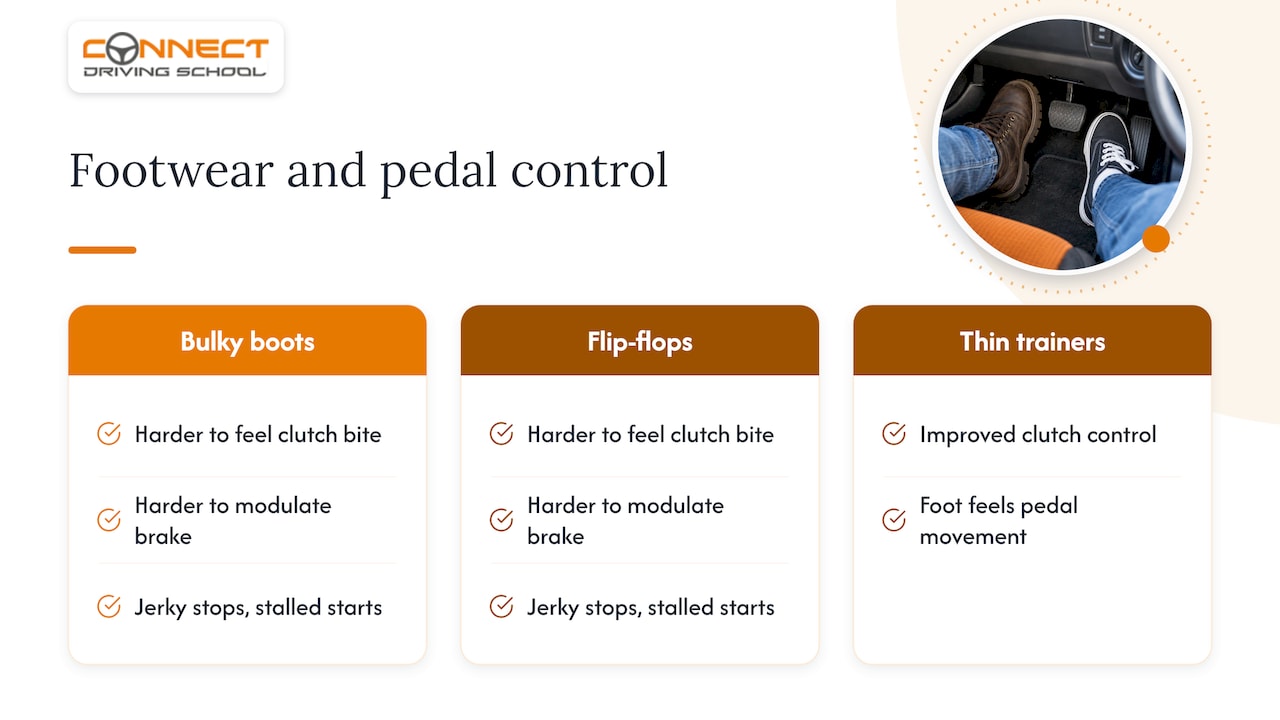
One pattern stands out: swapping a bulky boot for a thin-soled trainer mid-course often brings an immediate improvement in clutch control, simply because the foot can finally feel what the pedal is doing. Sort your footwear out early, and you spend your lesson time learning to drive rather than fighting your shoes.
Another option: prepare for lessons with Connect Driving School
Getting the right shoes sorted is one part of being lesson-ready; working with a patient, DVSA-approved instructor is the other. We offer tuition built around the same principle this article covers: control comes from clear feedback, whether that is through your feet or through how an instructor explains the controls.
- Our First Driving Lesson starts learners off gently, with footwear and seating checks built into the early minutes.
- Our Pass Plus course and Motorway Driving lessons build on good pedal habits once the basics are solid.
- Our preparation guide walks through what to bring and wear before you arrive.
If you are ready to book, our prices and packages page covers everything from a first lesson through to a full intensive course.
FAQ
What are the best shoes to wear while driving?
Thin-soled trainers, driving loafers or soft boat shoes work best, since they give a clear sense of pedal pressure without restricting ankle movement. The AA recommends soft shoes with thin soles and good grip, and advises against thick boots, high heels and flip-flops.
What is the best brand of driving shoes?
There is no single official “best” brand, but PUMA’s Speedcat and Piloti’s Shift are the names most often cited by motoring writers for combining a thin sole with a rounded heel. Plenty of classic leather loafers from smaller makers achieve the same result without the motorsport branding.
Do driving shoes really make a difference?
Yes, because sole thickness, heel shape and grip directly affect how precisely you can press and release the pedals. The Highway Code also treats this as a safety matter, since footwear that prevents proper control of the vehicle can lead to prosecution for careless or dangerous driving.
What are some good shoes for driving a car?
Low-profile trainers, suede boat shoes and leather driving loafers all suit everyday driving, while FIA-rated racing shoes suit track days rather than road use. The right choice depends on your journey type, from a short commute to a long motorway drive or an occasional track session.
Is it illegal to drive in flip-flops or barefoot?
Driving barefoot is not illegal in the UK, and the RAC confirms this directly, but you must still stay in full control of the vehicle. Footwear or bare feet that stop you operating the pedals safely can still result in a careless or dangerous driving charge.
Sources
- Gov
- Is it illegal to drive barefoot? | RAC Drive
- Best winter driving gear 2025: stay warm in your convertible or classic car this winter | Auto Express
Recommended
Related Posts

Comments (0)