
Shortlist of London short notice driving test car hire options, DVSA vehicle requirements, and a practical booking checklist to avoid test day refusal.
Sat Nav: Mock Drives Help UK Learners Handle Wrong Turns
Yes, most UK practical driving tests now use a sat nav, and the examiner provides and sets up a TomTom Start 52 rather than letting you use your own device. The independent driving section this covers runs for around 20 minutes and can take up much of the test, but it marks your safe driving decisions, not whether you follow the route perfectly.
TL;DR:
- Examiners provide and mount a TomTom Start 52; voice guidance starts automatically, but you can request silence before the independent driving section begins.
- About four in five candidates follow the sat nav, while others use traffic signs or both, and the examiner reveals your method at briefing.
- Examiners assess observation, signaling, speed, positioning, and calm decisions; a missed turn alone is not a fault unless your correction creates danger.
- Practise both navigation methods and full independent drives, following visible signs and road conditions over device instructions when they conflict.
Table of Contents
- What the sat nav section looks like on test day
- What examiners are actually marking during independent driving
- Practical sat nav practising tips for learners
- Common mistakes and how to avoid them on the sat nav section
- Reasonable adjustments and accessibility
- Instructor perspective: why mock independent drives work
- How we help you prepare for the sat nav section
- FAQ
- Sources
What the sat nav section looks like on test day
Your examiner pre-loads the route onto the TomTom Start 52, mounts it centrally on the windscreen or dashboard, and switches it on once the independent driving section begins. It stays visible throughout the test but only gives directions during that specific part of the drive. Voice guidance plays as standard, though you can ask for it to be muted if you prefer to read the screen instead.
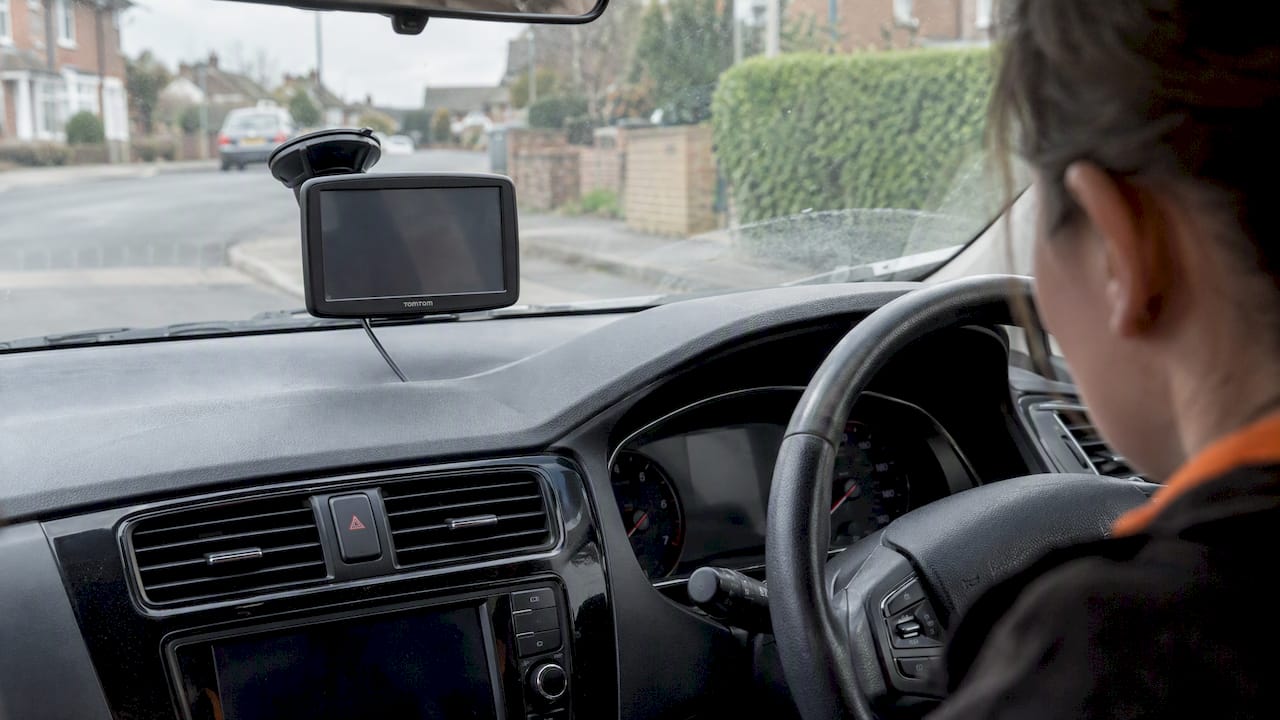
Not every test uses the device. DVSA figures from its trial period show that around 4 in 5 candidates follow a sat nav while the remainder navigate using traffic signs or a mix of both methods. You will not know which method applies until the examiner briefs you at the start.
A few practical rules apply on the day:
- The examiner supplies, mounts and operates the sat nav; you cannot bring or use your own device.
- Voice directions sound automatically unless you ask for them to be turned off beforehand.
- If asked to follow road signs instead, treat junctions exactly as you would on any ordinary drive.
- Leave your phone switched off and out of sight to avoid any risk of distraction or suspicion of misuse.
What examiners are actually marking during independent driving
The independent driving section exists to see how you make decisions when you are not being told exactly where to turn next, not to test your map-reading. According to official DVSA guidance, examiners are watching for:
- Observation and mirror use before changing speed, position or direction.
- Signalling at the right time, neither too early nor too late for other road users to react.
- Steady speed and road positioning appropriate to the conditions and lane markings.
- Calm responses to unexpected situations, such as roadworks or a parked vehicle blocking your path.
Taking a wrong turn during independent driving is not, on its own, a reason to fail. The same GOV.UK guidance confirms that examiners only mark a fault when a navigation slip leads to something unsafe, such as a late or harsh lane change. If you miss a turning, the examiner expects you to carry on safely and let the sat nav recalculate, rather than making a sudden correction.
This structure also lets DVSA send candidates down a wider variety of roads, including rural lanes and routes that would be hard to script with fixed instructions. That variety is part of why the test changes were introduced, since they were designed to make the assessment closer to the driving you will actually do once qualified.
Practical sat nav practising tips for learners
Treating the sat nav section as a rehearsed routine rather than a surprise on test day makes a real difference to how calmly you handle it.
- Before moving off, confirm the destination is set and the screen is positioned where a quick glance gives you the next instruction.
- Practise with the device mounted centrally so your eye movement away from the road stays brief and predictable.
- When a sign and the sat nav seem to disagree, always follow what you can see on the road: signs, road markings and the layout in front of you take priority.
- Book mock independent drives where your instructor sets a route on the sat nav and you drive the full session without touching the device, using examiner drills for UK learners to prepare effectively.
- Build up gradually: start with short sat nav only drills, add manoeuvres into the same session, then extend to a full 20 to 30 minute independent drive that mirrors the real test.
Pro Tip: Rehearse one full mock independent drive using the exact route structure your local test centre tends to use, so the glance-and-decide rhythm feels automatic by test day.
Common mistakes and how to avoid them on the sat nav section
Most sat nav related faults come down to timing rather than the device itself.
- Leaving lane changes too late after spotting an instruction: build in your mirror checks a few seconds earlier so you are never rushing a decision.
- Panicking after a missed turn: stay calm, keep driving safely, and let the sat nav recalculate rather than attempting an unsafe correction.
- Only practising one navigation method: since roughly 1 in 5 tests use traffic signs instead of the sat nav, rehearse both so you can switch confidently on the day. Our guide to common driving test mistakes covers more fault patterns worth reviewing beforehand.
- Arriving with an untidy checklist: remove personal devices from view, check the car is test-ready, and confirm any agreed adjustments with the examiner before you set off.
Reasonable adjustments and accessibility
If you need the sat nav adapted to suit a visual, hearing or processing difference, you can request this in advance through your test centre manager or directly with DVSA. Adjustments can include changing the contrast, colour or volume on the examiner’s device, or agreeing to use landmarks and simpler phrasing instead of standard left or right instructions.
- Request adjustments before your test date rather than on arrival.
- Bring any supporting evidence relevant to your request, such as a diagnosis letter.
- Arrive slightly early so the examiner can confirm the agreed settings before you start.
Instructor perspective: why mock independent drives work
Learners who rehearse full independent drives under sat nav direction tend to settle into the glance, decide, act rhythm faster than those who only hear about it in theory. Short drills followed by longer sessions let you build the habit of checking mirrors and road signs before reacting to the device, which is exactly what examiners want to see. Staged practice, rather than a single run-through the week before the test, is what turns sat nav navigation from a source of anxiety into a routine part of the drive.
— Mudassar
How we help you prepare for the sat nav section
We build sat nav confidence into our lessons across London, so you rehearse independent driving on roads similar to your actual test route. Our instructors run mock independent drives, combine them with manoeuvre practice, and can extend sessions into motorway driving or advanced courses once you have passed.
- Mock test sessions that mirror the examiner’s sat nav and sign based independent driving formats.
- Motorway and refresher lessons for learners who want extra confidence beyond the core syllabus.
- Flexible booking across our London areas with DVSA approved instructors.
For a structured run of mock drives, visit our prices page to book a session that fits your test date.
FAQ
What sat nav do they use in driving tests?
Examiners use a TomTom Start 52, which they supply, set up and mount themselves. You cannot bring or use your own sat nav device during the test.
How long is a sat nav in a driving test?
The independent driving section, which is when sat nav directions apply, typically lasts around 20 minutes and can run for much of the overall test. Outside this section, the device stays switched on but does not give turn by turn instructions.
Is the driving test now all sat nav?
No. Around 4 in 5 tests use the sat nav for independent driving, while the remaining tests ask candidates to follow traffic signs or a mix of both methods. You find out which method applies only once your examiner briefs you at the start of the drive.
What are the new driving test rules for 2026?
There is no separate set of new specific rules beyond those introduced in 2017: the sat nav and independent driving format introduced then remains the current structure. Examiners can still adapt sat nav settings or offer reasonable adjustments where a candidate needs them, as outlined in recent DVSA guidance.
How much does a driving test cost?
A practical driving test costs £62 on weekdays and £75 for evenings, weekends and bank holidays. You must book your own test and bring the required identification on the day.
Recommended
Related Posts

Comments (0)