
Compare the best theory test apps for UK learners, see how official DVSA questions and four in one practice fit together, and follow Mudassar’s study plan...
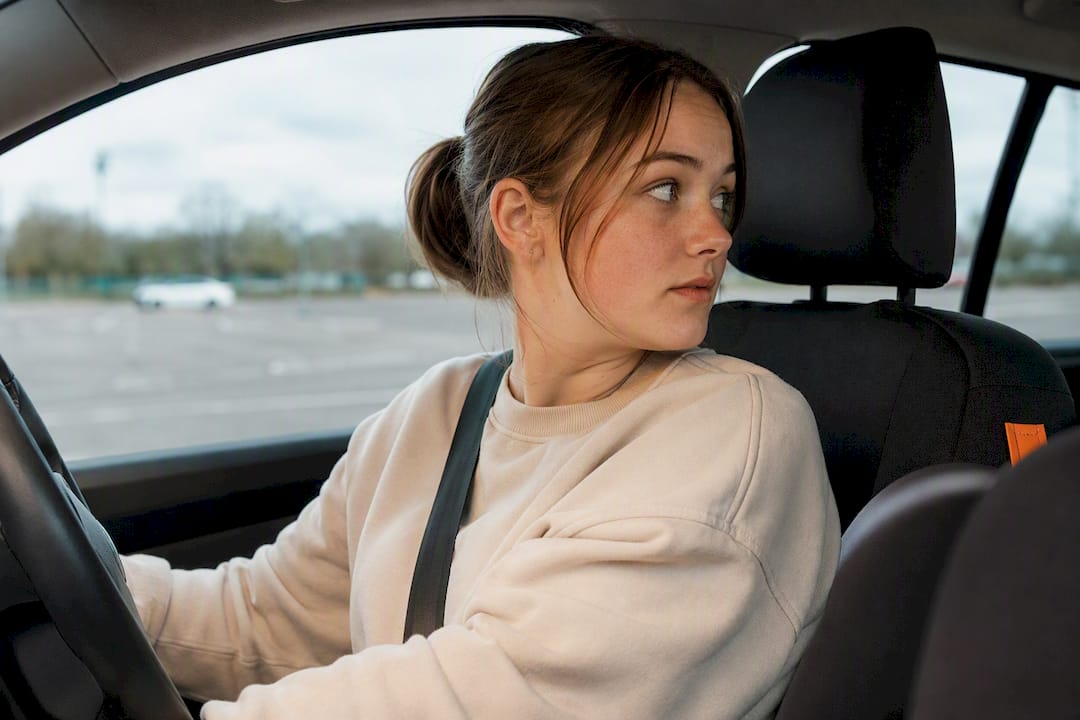
3 Drills UK Learners Use to Make Blind Spot Checks Obvious on Test Day
Every blind spot check follows the same sequence: mirror, signal, mirror again, then a quick shoulder turn before you move. This is what Rule 159 of the Highway Code demands and what a DVSA examiner is watching for on test day. Blind-spot mirrors and sensors can help, but neither one replaces the physical head turn.
TL;DR:
- Blind spot checks are essential before every movement that alters your vehicle’s path or speed, especially at junctions, lane changes, and exits from parking bays.
- Proper mirror adjustment and quick shoulder checks are crucial because blind spots vary with vehicle and seating position, and tech cannot replace physical head turns.
- Examiners expect clear and visible head or shoulder movement during manoeuvres, and failure to do so results in minor or serious faults, which can lead to test failure or penalties.
- Practice the blind spot check sequence repeatedly in low-pressure situations to make it automatic, focusing on quick, confident head turns rather than long or hesitant glances.
- Relying solely on mirrors or sensors is risky; mastering the physical head turn remains the most reliable method to ensure safety and passing the driving test.
Table of Contents
- What is a blind spot check and why does it matter?
- When do you need to check your blind spots?
- Do blind spot mirrors and sensors replace the shoulder check?
- What does the DVSA examiner expect, and what happens if you skip it?
- How do you make blind spot checks automatic before test day?
- Why the shoulder check still matters more than any gadget
- Sources
What is a blind spot check and why does it matter?
A blind spot is the area around your car that your mirrors simply cannot show you, and it shifts depending on the vehicle you’re driving, how your seat is set, and how fast the traffic around you is moving. That’s why a proper blind spot check isn’t a box you tick once, it’s a final look you take right before you commit to a manoeuvre, because the situation behind and beside you can change in the two seconds since you last checked your mirrors.
Start before you even move the car. Adjust your seat so you’re sitting high enough to see clearly over the bonnet, then set your door mirrors so you can just see the edge of your own car at the inner edge of the glass, as explained in this guide to Pre-Delivery Inspection. Angle your interior mirror to frame the rear window fully. Good mirror positioning shrinks the blind spot, but it never eliminates it entirely, which is exactly why the shoulder check exists.
Here’s the sequence examiners want to see, in order:
- Check your interior mirror to read what’s happening directly behind you.
- Check the relevant door mirror for the side you’re moving towards.
- Signal your intention clearly and early enough for others to react.
- Re-check your mirrors because a car or cyclist may have appeared since step one.
- Turn your head roughly 90 degrees towards the direction of travel for a decisive glance over your shoulder.
- Confirm it’s safe, then move, steering only after your head is back facing forward.
The most common mistake learners make is checking too early, glancing over their shoulder before they’ve even signalled, so the check is stale by the time they actually move. The second is staring too long, which drifts the car off line because your hands unconsciously follow your eyes. The third is turning the steering wheel at the same moment as the head turn, which is exactly when unintended drift happens. Keep the check short, keep it timed to just before you steer, and keep your hands steady while your head moves.
Pro Tip: Practise the head turn stationary first, in a car park or on your drive. Time how long a natural, confident 90 degree turn takes. Most learners are surprised how quick it can be once they’re not second guessing themselves.
When do you need to check your blind spots?
The rule of thumb from driveJohnson’s learning centre is straightforward: check whenever you’re about to change your car’s path or speed in a way that affects someone else. That covers more moments than most learners expect.
- Moving off from the kerb — check over the shoulder nearest the road, since that’s where a cyclist or car is most likely to appear.
- Changing lanes or merging — on a motorway this means checking earlier and holding your speed steady, because closing speeds are much higher than on a 30mph urban road.
- Turning at junctions and roundabouts — this is where the A-pillar can hide a pedestrian or cyclist entirely, so lean your head slightly and look around the pillar rather than trusting your peripheral vision.
- Parallel parking or reversing — check both shoulders repeatedly, since you’re moving slowly but through an area with poor rear visibility.
- Exiting a parking bay — assume a pedestrian could step out from behind a van at any second.
Cyclists, motorcyclists and HGVs deserve extra attention because they’re either small enough to vanish in a blind spot or big enough to hide several cars behind them. A motorcycle doing 40mph closes distance far quicker than most learners estimate on a single glance.
Do blind spot mirrors and sensors replace the shoulder check?
No, and this is where a lot of new drivers get complacent. Stick-on convex mirrors, fitted correctly to the outer edge of your existing door mirror, extend your field of view and are a genuinely useful cheap addition, costing very little for the extra coverage they give at the edges. Blind spot monitoring systems (BSM) go further, using sensors to flag a vehicle in your blind zone with a light or beep.
Both have real value, and both have real limits:
- Convex mirrors distort distance perception slightly, so use them for detection, not precise judgement of gap size.
- BSM sensors can miss cyclists, motorcyclists, or anything obscured by mud, rain, or a dirty bumper.
- Relying on a flashing light instead of looking creates what safety researchers call automation bias, the habit of trusting a system over your own eyes even when it’s wrong.
For UK driving tests specifically, neither mirrors nor BSM change what’s expected of you. A driveJohnson’s style POM routine (Preparation, Observation, Manoeuvre) still requires the physical, observable head turn, technology or not.
What does the DVSA examiner expect, and what happens if you skip it?
Examiners are trained to look for a clear, visible head or shoulder movement during moving off, lane changes, and manoeuvres like turning right into a side road. If they can’t see you check, as far as the marking sheet is concerned, you didn’t check, even if you glanced sideways with your eyes only.
The practical consequences scale with the risk created:
- A missed check with no consequence for other road users usually registers as a minor fault.
- A missed check that causes another driver, cyclist or pedestrian to have to react is marked as a serious fault, and one serious fault fails the test outright.
- Away from the test centre, failing to check blind spots in a real driving situation that leads to a collision or near miss can be treated as driving without due care and attention, or in more serious cases, dangerous driving. Both carry penalty points, fines, and potential prosecution.
Rule 159 isn’t a suggestion. It’s the legal baseline the examiner is testing against, and it’s the same baseline that applies once you’re driving unsupervised.
How do you make blind spot checks automatic before test day?
Habit beats memory every time under pressure, so the goal is drilling the check until it happens without conscious thought. A few practical exercises help this stick.
- Lane-change boxes: on quiet dual carriageways, practise the full mirror, signal, mirror, shoulder check sequence repeatedly at a set pace, even when there’s no car nearby to react to.
- Moving-off repetitions: pull away from the kerb ten or fifteen times in a session, focusing only on timing the shoulder check to just after the mirror check, not before.
- Passenger walk-rounds: have someone stand where a cyclist would be during a moving-off drill, so you get honest feedback on whether your check would have actually spotted them.
Instructors at Connect Driving School build this repetition into early lessons deliberately, because a check that only happens when you’re thinking about it isn’t reliable enough for test day or for driving afterwards. DVSA-approved instructors there report that learners who drill the sequence in low-pressure settings, quiet estates, empty car parks, tend to carry it through automatically once traffic gets busier.
Pro Tip: Keep the check short and decisive rather than slow and searching. A quick, confident turn reads as competence to an examiner; a long, hesitant look reads as uncertainty, even if you’re checking the same blind spot.
Why the shoulder check still matters more than any gadget
The conventional advice on this topic tends to focus entirely on the mechanics, mirror here, turn there, and skips the part that actually determines whether a learner keeps doing it after passing. Checks become permanent habits through repetition under low stakes, not through being told once that it’s important. That’s the gap most guidance misses.
The overrated fix is technology. Blind spot mirrors and BSM sensors get marketed as solutions, but the evidence points the other way: they’re useful redundancy, not substitutes, and leaning on them too early in your driving life risks building the wrong habit before the right one sets in.
What actually works is what examiners are trained to spot, a short, deliberate, visible head turn timed correctly in the sequence, drilled until it happens without thought. Prioritise that over any gadget. Get the movement automatic first. Everything else, mirrors, sensors, confidence at speed, follows from that one habit done properly, every single time.
— Mudassar
Sources
Related Posts

Comments (0)