
Master the four controls DVSA examiners focus on — steering, pedals, clutch (manual) and the cockpit drill — with short, repeatable drills to practice...
Pass Wanstead Test Routes: 3 Instructor Tips to Nail Redbridge and A12
Wanstead test routes lean heavily on the A12 and A406 dual carriageways, the Redbridge spiral roundabout, Wanstead High Street, and the residential loops around Aldersbrook and Snaresbrook. If you master one skill above all others, make it lane discipline paired with sharp, early observation. Book a mid-morning or mid-afternoon slot where you can. The A12/A406 approaches turn brutal during rush hour, and a calmer road adds calm to your own driving.
TL;DR:
- Master early lane decisions before entering spiraling roundabouts to avoid costly late corrections that examiner penalizes heavily.
- Focus on speed matching when merging onto busy roads like the A12 and A406, checking mirrors early and settling before lane changes.
- Practice hazards like parked cars, door hazards, and narrow streets to improve decision-making and maintain generous gaps in complex areas.
- Display confidence by repeatedly practicing high-risk locations such as the Redbridge roundabout, and set specific habits for early observation and lane discipline.
- Aim for calm driving conditions by scheduling tests outside peak rush hours and practicing in wet weather to sharpen early observation and lane commitment habits.
Table of Contents
- What are Wanstead driving test routes actually like?
- Redbridge, the A12/A406, and other high-value spots to master
- Which mistakes cause the most test failures around Wanstead?
- How should you actually practise Wanstead test routes?
- What should you do on the morning of your Wanstead test?
- Instructor corner: three Wanstead tips worth more than any route map
- What do official Wanstead driving test routes actually cover?
- How does Wanstead’s traffic change through the day?
- How does weather change the Wanstead test experience?
- A learner’s honest account of cracking Wanstead’s roundabout problem
- How Connect Driving School can help you prepare for Wanstead
- Where to find more Wanstead route detail
- Sources
What are Wanstead driving test routes actually like?
Ask any instructor who covers this test centre and they’ll tell you the same thing: Wanstead punishes hesitation. The road mix here isn’t forgiving of a learner who’s still deciding which lane to be in as the roundabout arrives.
The typical route blends four road types, each testing something different:
- Multi-lane A-roads (A12 Eastern Avenue, A406 North Circular) that demand confident merging and speed matching.
- A busy high street (Wanstead High Street) full of parked cars, pedestrians, and buses pulling in and out.
- Residential loops around Aldersbrook and Snaresbrook, narrow enough that meeting an oncoming van becomes a genuine test of judgement.
- Technical junctions, chiefly the Redbridge roundabout, where lane choice has to be locked in before you arrive, not during.
Pass rates at this centre sit below the national average, and that isn’t a coincidence. Examiners here get more opportunities than most to watch how a candidate handles multi-lane decision-making under pressure, because the routes are built around exactly those moments.
If you’re planning lesson time, the highest-risk spots to prioritise are the Redbridge roundabout, the Hermon Hill exits near the test centre, and the door-hazard stretch of Wanstead High Street. Get comfortable there and most of the rest of the route falls into place, because the skills transfer. Once you can hold a lane through a spiral roundabout without flinching, a simpler two-lane junction stops feeling like a threat.
Redbridge, the A12/A406, and other high-value spots to master
Every high-fail location around Wanstead rewards the same underlying habit: decide early, commit, and stop adjusting once you’ve committed. Here’s how that plays out at each one.
Redbridge roundabout. This is a spiral roundabout, which means the lane markings curve you toward a specific exit well before you actually reach it. The instinct that gets learners into trouble is trying to correct a lane choice mid-roundabout. Pick your lane on approach, based on the exit you need, and hold it. Late lane changes inside the roundabout are one of the hardest faults to recover from once committed, because there’s rarely a clean gap to move into.
A12 and A406 slip roads. Merging here is about speed, not gaps. Match the traffic flow before you join, check your mirrors early rather than at the last second, and never plan a lane swap the moment you merge. Settle first, then move.

Hermon Hill and the test centre exit. Watch for timed bus lane restrictions here, and be ready for a sudden drop from a faster limit down to 20mph near the centre itself. Build a scanning routine you run automatically the moment you pull away: mirror, blind spot, speed check.
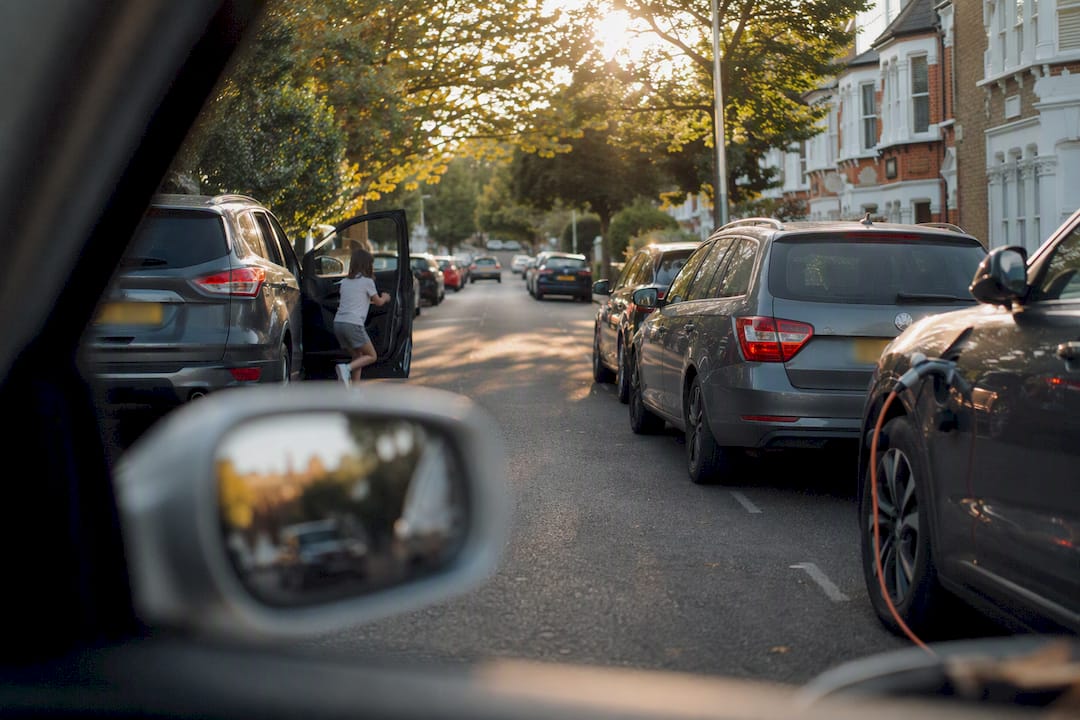
Wanstead High Street and Aldersbrook. Parked cars and delivery vans mean door hazards appear with no warning. Scan under parked vehicles for feet or shadows, keep a generous gap where you can, and on narrow residential streets, use small, early steering inputs rather than sharp last-second corrections when meeting oncoming traffic.
Secondary practice roads. Cambridge Park and Hollybush Hill come up often enough to be worth a run-through, mostly for junction positioning and general traffic awareness rather than one specific hazard.
Pro Tip: Sit in the passenger seat for five minutes near the Redbridge roundabout before your next lesson and just watch how experienced drivers commit to their lane. It reframes the roundabout from “confusing” to “predictable” faster than any amount of theory.
Which mistakes cause the most test failures around Wanstead?
Most Wanstead test failures trace back to five faults, and every one of them has a specific, drillable fix.
- Wrong lane choice on approach to roundabouts. Fix: choose your lane based on your intended exit at least 20 to 30 metres out, then hold it regardless of what other traffic does.
- Late or missed mirror checks. Fix: build a habit of checking mirrors the moment you spot a hazard ahead, not when you’re already reacting to it.
- Hesitation at junctions and merges. Fix: decide your action before you’re at the give-way line. Indecision reads as unsafe to an examiner even when it isn’t.
- Edging into yellow box junctions on Wanstead High Street. Fix: stop before the box every time your exit isn’t clear, no exceptions.
- Poor technique when meeting oncoming traffic on narrow streets. Fix: slow early, use small steering adjustments, and pick your gap well before you’re level with the obstruction.
For each of these, run short 15 to 20 minute drills focused on just that one fault. Trying to fix all five in a single lesson usually fixes none of them properly.
How should you actually practise Wanstead test routes?
Memorising a fixed sequence of turns is close to useless here, because examiners choose from route variations depending on real-time traffic. What actually helps is getting familiar with hazard types and decision points rather than a script.
Three session structures work well depending on how much time you’ve got:
- 30 minutes: One pass through Redbridge roundabout, repeated three or four times from different approaches.
- 45 minutes: Combine roundabout practice with a stretch of A12/A406 merging, focusing purely on speed matching.
- 60 minutes: Full loop covering the roundabout, a dual-carriageway merge, and a narrow residential meeting scenario on Aldersbrook streets.
For tools, a mapped GPX route or a simple Google Maps practice drive gives you route familiarity, while a mock independent-driving session (following satnav prompts you haven’t rehearsed) builds the real decision-making skill examiners assess. Multiple route packs list well over a dozen variations used around this centre, so treat that as your practice pool rather than banking on one sequence.
Pro Tip: Repeat your worst junction until lane choice becomes automatic, not until you feel confident. Confidence lags behind competence by a lesson or two, so trust the repetition over the feeling.
What should you do on the morning of your Wanstead test?
Parking near the test centre is limited, so arriving early gives you time to park legally and walk over without rushing. Hermon Hill and Wanstead High Street both carry timed bus lane restrictions, and driving in one at the wrong time is an instant, avoidable fault. Where you have any choice over your slot, mid-morning or mid-afternoon bookings dodge the worst of the commuter gridlock feeding onto the A12/A406, and a calmer approach road means a calmer start to the test itself.
In the last 15 minutes before you go in:
- Confirm you have both parts of your licence and your provisional or full documentation ready.
- Do a final walk-round check of the car with your instructor.
- Check mirrors and seating position one last time before the engine starts.
- Take two or three slow breaths. Nerves show up as hesitation, and hesitation is what examiners mark down.
- Remind yourself of your Redbridge roundabout lane plan. Decide it now, not when you get there.
Instructor corner: three Wanstead tips worth more than any route map
As a DVSA-experienced instructor, the pattern I see most often at Wanstead isn’t a lack of driving ability. It’s indecision at exactly the wrong moment.
- Commit to your roundabout lane early. Candidates who decide on approach almost never fail Redbridge for lane discipline. Candidates who decide mid-roundabout almost always do.
- Treat every merge as a speed problem first. Get your speed right and the gap tends to appear on its own.
- Practise meeting traffic on narrow streets deliberately, not as an afterthought between “bigger” hazards.
A focused block of lessons built around these three habits, rather than a scattergun tour of the whole test area, is usually what turns a shaky learner into a pass. If you want that kind of targeted practice, book lessons with an instructor who knows this test centre.
What do official Wanstead driving test routes actually cover?
Examiners at Wanstead draw from a set of pre-planned route variations rather than a single fixed course, and route resource sites document a substantial number of these, each built around the same core landmarks in different orders. A typical route starts near the test centre, heads out via Hermon Hill toward the Redbridge roundabout, threads through a stretch of the A12 or A406 for a merge and dual-carriageway section, then loops back through residential streets around Aldersbrook or Snaresbrook before returning through Wanstead High Street.
What varies between routes is sequencing and which junctions get used, not the underlying skill set being tested. One route might hit the roundabout early and the high street late; another does the reverse. That’s precisely why route packs cite well over a dozen variations rather than a single definitive path, and why examiners can shift the order on the day depending on traffic.
The independent driving section, typically the last stretch before returning to the test centre, tends to draw on the residential loops or a secondary road like Cambridge Park, giving the examiner a clean read on how you make decisions without turn-by-turn instructions. This is deliberately the part you can’t over-rehearse your way through. It rewards genuine hazard awareness over route memory, which is exactly why instructors push mock independent-driving sessions using random satnav prompts rather than a rehearsed sequence.
How does Wanstead’s traffic change through the day?
Wanstead’s traffic follows a predictable rhythm, and it’s worth planning around it rather than fighting it. The A12 and A406 both function as major commuter arteries into and out of central and east London, which means the morning and early evening rush hours turn the slip roads and merges into genuinely difficult territory even for confident drivers.
Wanstead High Street has its own pattern, busiest through the late morning and early afternoon when shoppers, delivery vehicles, and buses all compete for the same stretch of road. That’s actually a useful window for practice, not just a risk to avoid, because it forces the exact door-hazard scanning and pedestrian awareness examiners want to see. School run periods add a further spike of pedestrian activity around the residential streets near Aldersbrook, typically weekday mornings and mid-afternoon.
The practical upshot: if you can influence your test time, mid-morning after the school run and rush hour have cleared, or mid-afternoon before the evening crush begins, gives you calmer versions of the A12/A406 approach roads. You’ll still get the high street’s natural pedestrian activity, which is fine, since that’s a skill worth being tested on. What you want to avoid is stacking heavy dual-carriageway traffic on top of every other challenge in the same 40-minute test.
How does weather change the Wanstead test experience?
Rain changes the character of every Wanstead hazard without adding new ones. The Redbridge roundabout’s road markings become harder to read at speed when wet, which makes committing to your lane choice even earlier more important, not less. Stopping distances on the A12 and A406 stretch out noticeably in the wet, so the speed-matching habit that matters on a dry merge matters more when the road surface is compromised.
Wanstead High Street brings its own wet-weather problem: pedestrians moving faster and less predictably between shelter, plus spray reducing visibility around parked vehicles and door hazards. Autumn and winter add another layer, since low sun angles along the A12’s eastward stretches can genuinely dazzle at certain times of day, and fallen leaves on the residential streets around Snaresbrook reduce grip in a way that catches learners out on the narrow meeting scenarios.
None of this should change your fundamental approach. It should sharpen it. If your habits around lane commitment and early observation only work in good conditions, they weren’t solid habits to begin with. A wet-weather lesson or two before your test date is one of the more underused pieces of preparation, precisely because so few learners deliberately book one.
A learner’s honest account of cracking Wanstead’s roundabout problem
Most learners I see stall on the same thing: deciding their roundabout lane too late, then panicking and drifting. The fix that actually works is absurdly small. Commit to your exit lane 20 to 30 metres before you arrive, out loud if it helps, and just hold it. Try that on your very next lesson before anything else.
— Zafar
How Connect Driving School can help you prepare for Wanstead
Connect Driving School puts DVSA-approved instructors on the ground across London, including learners heading for the Wanstead test centre, with lessons designed around the exact spots covered above rather than generic town driving. Lessons start from £14.99 an hour, and instructors build targeted sessions around the Redbridge roundabout, A12/A406 merging, and Wanstead High Street specifically, alongside mock tests that mirror the real thing.
If lane hesitation or roundabout nerves are your sticking point, a short block of focused lessons tends to fix it faster than general practice ever does. Book a lesson with Connect Driving School and get a Wanstead-specific practice plan built around the routes you’re actually going to face.
Where to find more Wanstead route detail
For further route detail, see Wanstead driving test routes and maps and Wanstead pass rate and route statistics.
Sources
Related Posts
Comments (0)