
Turn MSPSL into an automatic habit for UK driving tests. Learn DVSA rules, mirror and signal timing, and instructor-led drills that stop observation faults.
Start with one intro lesson to beat driving lesson anxiety in the UK
Most people with driving lesson anxiety can and do learn to drive safely, but if your anxiety causes concentration problems or panic attacks, speak to your GP and check whether you need to notify the DVLA. Before your next lesson, do two things: tell your instructor exactly how you feel, and practise box breathing for a few minutes beforehand so your body arrives calmer than your mind.
TL;DR:
- Anxiety that affects concentration or causes panic attacks must be reported to the DVLA to prevent license suspension or penalties, especially if it impairs safe driving.
- Choosing a patient, DVSA-approved instructor experienced in nervous learners and starting lessons in quiet areas can significantly reduce anxiety and build confidence.
- Pre-lesson routines like adequate sleep, light eating, avoiding caffeine, and practicing breathing techniques can help manage nerves before driving sessions.
- Having a clear plan to signal and pull over during panic or overwhelm, along with specific grounding techniques, helps maintain safety and reduce episode severity.
- Gradual exposure starting in quiet environments and potentially combining lessons with professional mental health support can help overcome driving anxiety over time.
Table of Contents
- Why driving lessons provoke anxiety and how to recognise your symptoms
- Is it safe to drive with anxiety, and when must you tell the DVLA?
- Choosing an instructor and lesson format that reduce anxiety
- Pre-lesson routine: simple steps to lower nerves before you get in the car
- In-lesson tactics: what to do if panic, stalling or overwhelm happens
- Building confidence between lessons: exposure, courses and professional help
- What an experienced instructor actually does when a pupil panics
- Ready to book a driving lesson that actually fits how you feel?
- Sources
- FAQ
Why driving lessons provoke anxiety and how to recognise your symptoms
Driving anxiety rarely comes from nowhere. It usually has an identifiable trigger, and naming yours makes the coping strategies further down this article far more useful.
Learners tend to fall into a handful of patterns:
- Fear of causing a serious accident or hurting someone else
- A previous bad experience, whether a near miss, a failed test, or a frightening moment as a passenger
- Feeling judged, watched, or rushed by an instructor or other road users
- Overwhelm at complex junctions, roundabouts, or multi-lane roads
Your body reacts before your brain catches up. Heart palpitations, dizziness, tunnel vision, and a tendency to freeze or overcorrect are the classic signs, and they matter because anxiety and concentration are directly linked: a racing mind struggles to process mirrors, speed, and hazards at the same time. That is the safety rationale behind almost every piece of advice in this article. Reducing the physical anxiety response is not just about comfort. It is about giving your brain the spare capacity it needs to drive well.
Is it safe to drive with anxiety, and when must you tell the DVLA?
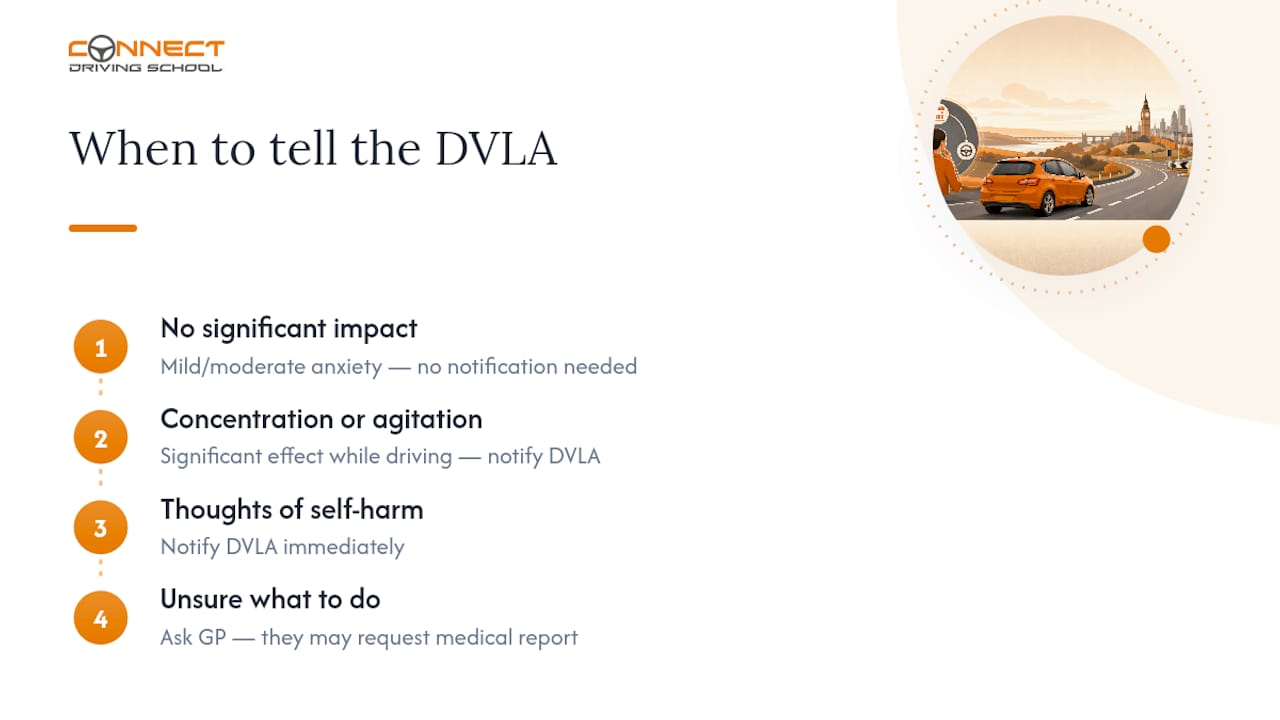
Mild to moderate anxiety that does not affect your concentration does not need to be reported anywhere. The rule only bites when anxiety genuinely interferes with your ability to drive safely, and the official DVLA guidance is specific about this: you must notify the DVLA if your condition significantly affects concentration, causes agitation behind the wheel, or involves thoughts of self-harm.
Failure to notify a severe, driving-impairing anxiety condition can result in a monetary penalty, and in serious cases, the DVLA may restrict or suspend your licence until you can demonstrate stability, according to gov.uk’s fitness-to-drive guidance. That sounds harsh, but the DVLA isn’t targeting nervous learners. It’s targeting the small number of cases where anxiety genuinely compromises road safety.
If you’re unsure which category you fall into, ask your GP directly. Describe how anxiety shows up when you drive or imagine driving, not just how you feel generally. The DVLA sometimes requests a medical report before making a decision, and your GP can flag early if that’s likely, so you’re not caught off guard later.
Choosing an instructor and lesson format that reduce anxiety
The right instructor changes everything. Before booking a block of lessons, run through this checklist:
- Confirm they’re a DVSA-approved instructor (ADI), not just an unqualified friend or relative teaching informally
- Ask directly whether they have experience teaching anxious or nervous learners
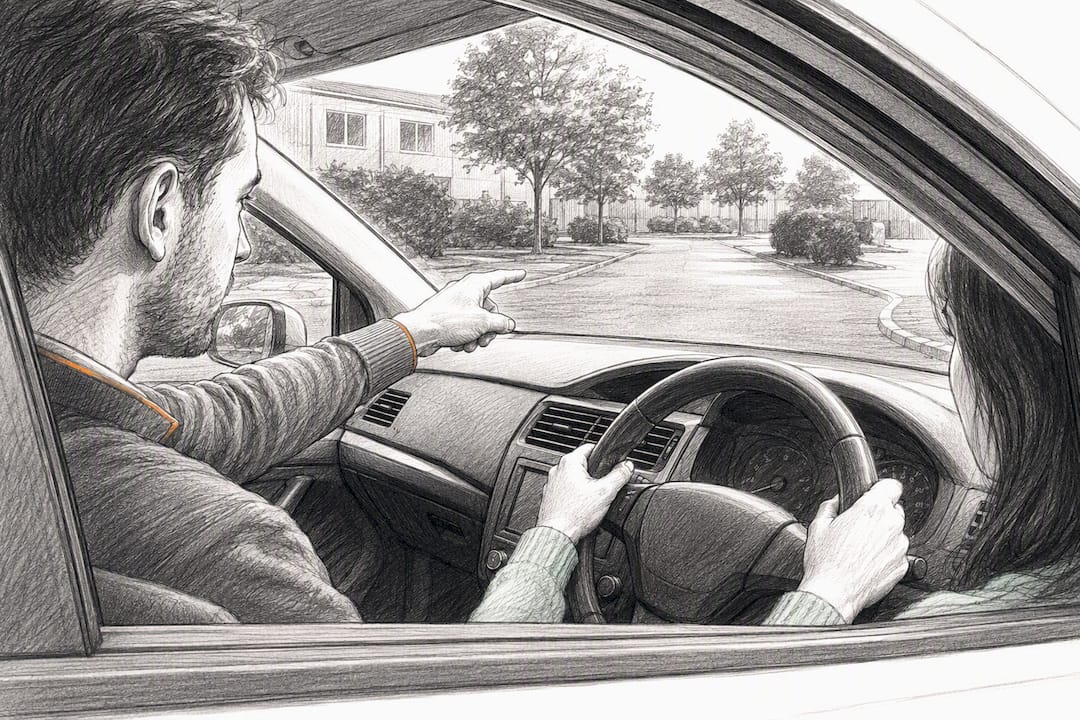
- Ask if lessons can start in a quiet car park or residential street rather than straight into traffic
- Check whether lesson length is flexible, since some anxious learners do better with 90-minute sessions that allow a slower warm up
- Notice their tone on the phone. Patience and warmth on a first call usually carry through to the car
Red flags include instructors who sound irritated by your questions, push you to book a large block before a taster lesson, or dismiss your nerves as something you’ll “just get over.”
Pro Tip: Ask for a single introductory lesson before committing to a package, and specifically request a quieter time of day, like mid-morning on a weekday, when roads are calmer and instructors are less rushed between bookings.
Pre-lesson routine: simple steps to lower nerves before you get in the car
What you do in the hours before a lesson has more influence on how it goes than most learners realise.
- Get a proper night’s sleep. Tiredness amplifies anxiety and slows reaction time
- Eat something light beforehand. Driving on an empty stomach makes shakiness worse
- Skip caffeine on lesson days. Instructors regularly warn that caffeine raises heart rate and jitteriness, which mimics and worsens anxiety symptoms
- Drink water and leave enough time to arrive without rushing
- Familiarise yourself with the car’s basic controls beforehand if you can, even just sitting in a parked car
Mentally, try a short round of box breathing (in for four counts, hold for four, out for four, hold for four) in the minutes before your instructor arrives. Then pick one small, specific goal for the lesson, such as “practise left turns confidently,” rather than a vague aim like “do better today.” Specific goals give anxious minds something concrete to hold onto.
In-lesson tactics: what to do if panic, stalling or overwhelm happens
Anxiety spikes happen mid-lesson more often than people admit, and having a plan matters more than trying to will it away.
- Signal and pull over. Indicate early, find a safe spot, and stop. Say “I need a moment” to your instructor. A good instructor will expect this phrase and know exactly what to do with it
- Breathe before you talk. Box breathing works here too, or try the 5-4-3-2-1 grounding technique: name five things you can see, four you can hear, three you can touch, two you can smell, one you can taste
- Reset after a stall. Handbrake on, clutch down, check mirrors, find first gear, check again, go. Running the same short checklist every time turns a stall from a crisis into a routine
- Debrief before driving on. Ask your instructor what actually happened, not just how it felt. A stalled hill start caused by clutch control is a very different problem to one caused by panic, and naming it correctly stops it looming larger than it should
- Set a micro-goal for the rest of the lesson. Something achievable, like completing one more junction calmly, rebuilds momentum fast
Pro Tip: Agree the “I need a moment” phrase with your instructor before you even start driving. Knowing you have a pre-agreed off-ramp reduces anxiety on its own, often before you ever need to use it.
The NHS’s guidance on anxiety and panic recommends exactly these kinds of grounding and breathing techniques as first-line coping tools, and they translate directly into the car.
Building confidence between lessons: exposure, courses and professional help
Confidence builds in stages, not leaps. A simple gradual exposure plan looks like this:
- Step one: quiet car park or empty road, focusing purely on control (clutch, steering, mirrors)
- Step two: short drives on calm residential roads with light traffic
- Step three: brief A-road drives once step two feels routine, not just tolerable
Once you’re managing traffic confidently, a Pass Plus course or dedicated motorway tuition with an ADI can extend that confidence into higher-speed driving, and the AA notes both are commonly used to build skill after the basics are solid.
If anxiety persists despite practice, CBT and counselling can help address the underlying thought patterns. Anxiety UK and NHS talking therapies both offer support alongside your lessons, not instead of them.
What an experienced instructor actually does when a pupil panics
I structure a nervous learner’s lesson the same way every time: a short chat to set one tiny goal, low-demand practice somewhere quiet, a single stretch beyond comfort, then a proper debrief before they leave the car. When a pupil freezes at a junction, I don’t talk over them. I get them to pull in, breathe, and tell me one thing they noticed going right before we try again.
If you’re anxious, say so when you book. A simple “I get very nervous, do you teach nervous learners?” tells any decent instructor exactly how to plan your first session.
— Mudassar
Ready to book a driving lesson that actually fits how you feel?
The driving school is built around supporting learners who need patience, not pressure. Lessons can be flexible in length, and the approach focuses on building confidence gradually rather than throwing learners into traffic on day one.
When you enquire, mention your anxiety directly and ask for a shorter warm-up on quieter roads to start. If your anxiety is more than mild nervousness, pair your lessons with a conversation with your GP. Driving tuition and medical support aren’t competing options, they work better together. When you’re ready, you can book a lesson with Connect Driving School and start with a single introductory session rather than committing to a full block straight away.
This article is general information, not a substitute for advice from a qualified doctor. Consult a qualified healthcare professional about your own circumstances before acting on anything here.
Sources
FAQ
How can I get over driving anxiety quickly?
There’s no instant fix, but box breathing before and during lessons, picking one small goal per session, and telling your instructor how you feel all reduce anxiety noticeably within a few lessons.
Can you learn to drive if you have anxiety?
Yes, most people with anxiety learn to drive successfully, though if it significantly affects concentration or causes agitation you may need to notify the DVLA and get medical advice first.
Why am I suddenly afraid to drive on the motorway?
Motorway fear often develops after a stressful experience, a long break from driving, or simply because higher speeds and merging traffic demand more concentration than anxious minds can easily supply; motorway tuition with an ADI is a common way to rebuild that specific confidence.
What can I do to overcome my fear of driving alone?
Build up gradually with short, familiar routes before longer solo drives, use grounding techniques if nerves spike, and consider extra supervised practice or a Pass Plus course before going it alone on unfamiliar roads.
Related Posts

Comments (0)