
Compare the best theory test apps for UK learners, see how official DVSA questions and four in one practice fit together, and follow Mudassar’s study plan...
Local School Picks and a One Week Plan for Morden Test Routes
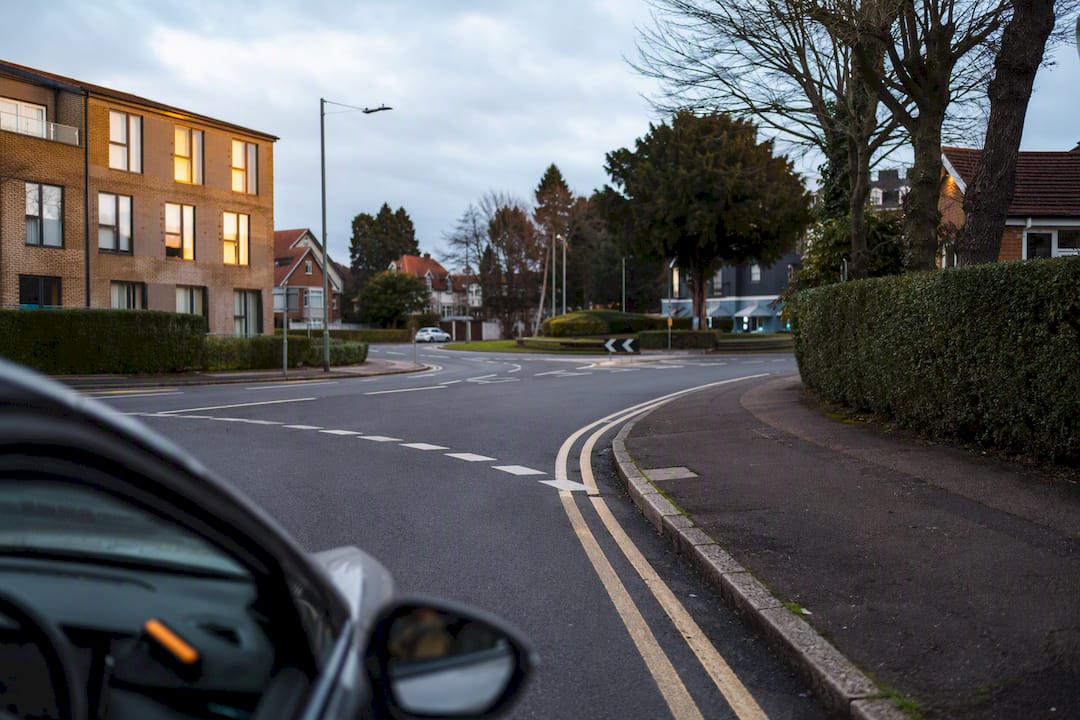
The Morden test mixes fast A24 dual carriageway driving with tight, narrow streets around the St Helier estate, and the gyratory near Morden Hall Park catches out more learners than anything else on the route. Master early lane selection and treat every bus lane as live, and you have solved most of what the test throws at you. Beyond that, booking a few sessions with an instructor who already knows these roads will shave weeks off your preparation.
TL;DR:
- Practice lane selection at the Morden gyratory multiple times and simulate different traffic conditions to build confidence in choosing the correct exit.
- Prioritize practicing the route’s typical roads, such as the A24, A297, and residential streets like York Road and Wool Road, to handle both high-speed and tight, low-speed zones smoothly.
- Focus on the trickiest junctions like the Morden Hall Gyratory, Rose Hill roundabouts, and Wool Road hill starts with specific drills to avoid common faults.
- Use route-mapping apps, official guidance, and video review to enhance preparation but ensure lessons include mock tests from Tudor Drive that replicate real exam conditions.
- Adapt driving techniques to weather and traffic variances, especially wet conditions, rush hours, and poor light, to demonstrate good judgment and control on the test day.
Table of Contents
- Which Morden driving schools know these routes best?
- Which roads and neighbourhoods do Morden test routes commonly use?
- What are the trickiest junctions on the Morden test?
- How should you structure practice for Morden test routes?
- What do examiners actually check on Morden routes?
- How do you check up-to-date Morden test routes before test day?
- How do you handle rain, rush hour and bad light on Morden routes?
- An instructor’s view on the final week before your Morden test
- Ready to practise the actual Morden test routes?
- Sources
Which Morden driving schools know these routes best?
Not every instructor drives the roads around Tudor Drive regularly, and that matters more in Morden than in most test centres because the gyratory and the Rose Hill spirals punish anyone who has not rehearsed them properly. Here is how three local options and the Morden test centre itself stack up.
A few things worth knowing before you book:
- Wimbledon Driving School has built a long track record around structured intensive courses, which suits learners who want a fixed programme rather than loose weekly lessons.
- Formula Jon leans on digital tracking tools, useful if you like watching your progress logged lesson by lesson rather than trusting memory.
- Connect Driving School focuses lessons directly on local hazards like the Morden Hall Gyratory and bus-lane recognition, with instructors who can run a mock test starting from Tudor Drive itself.
- Morden Driving Test Centre isn’t a school at all. It’s the DVSA site at 10 Tudor Drive where your test actually starts and finishes, so use it as your orientation point, not a place to book lessons.
Whichever school you choose, ask two direct questions before handing over any money: has the instructor driven a mock test from Tudor Drive in the last month, and can they run through bus-lane scenarios specifically, rather than generic town-centre driving.
Which roads and neighbourhoods do Morden test routes commonly use?
Routes from Morden Driving Test Centre pull from a predictable mix of road types, and knowing them changes how you plan practice sessions. The AUDrive route breakdown confirms examiners regularly use the A24 (London Road), the A297 (Morden Hall Road), and connecting sections of the A217, alongside a cluster of residential streets that trip up learners who only ever drive on their usual commute.
Expect to cover:
- The A24 (London Road) for dual carriageway driving at up to 50 mph, testing your speed control and overtaking judgement.
- The A297 (Morden Hall Road) feeding directly into the gyratory near Morden Hall Park.
- Tudor Drive, the road you exit straight onto from the test centre, so the first minute of your test happens here.
- Stonecot Hill and Grand Drive, both used for junction and roundabout work.
- Wool Road and Pepys Road, known locally for their steep gradients and hill-start manoeuvres.
- York Road, a narrow residential stretch with limited-visibility stop junctions.
- St Helier estate roads, dense with parked cars, pedestrians, and 20 mph limits that demand constant speed discipline.
The jump between these zones is the real test. You go from a 20 mph residential crawl past parked cars on the St Helier estate to 50 mph dual carriageway merging within a couple of minutes, and examiners watch closely for how smoothly you adjust. Learners who only practise on wide, open roads near home tend to freeze the first time they meet Grand Drive’s tighter geometry, so build both extremes into every session rather than favouring whichever feels more comfortable.
What are the trickiest junctions on the Morden test?
Five spots account for most of the local faults examiners record, and each one has a specific fix rather than a vague “be careful” instruction.
- Morden Hall Gyratory. Pick your lane at least one junction before you arrive and commit to it. AUDrive’s local hazard notes recommend accepting a wrong exit over attempting a mid-gyratory lane change, since cutting across spirals late is what triggers serious faults here.
- Rose Hill spiral roundabouts and Beverley Roundabout. Lane markings appear early but merge distances are short, so read the road signs well before you reach the roundabout itself.
- Grand Drive double mini-roundabout. Two roundabouts sit close together, and the fault most learners make is fixing their eyes on the first one and missing what’s happening at the second. Keep scanning between both.
- Wool Road hill starts and York Road stop junctions. Wool Road demands precise clutch control on a steep gradient; York Road has genuinely poor visibility, so a full dead stop matters more than usual, according to GodriveReady’s route notes.
- Bus lanes across six local zones. Treat every bus lane sign as active, whatever time you’re driving. Entering one during operating hours is a serious fault, not a minor one.
Pro Tip: Drive past the Morden Hall Gyratory at different times of day during practice, not just once. Traffic volume changes how early you need to commit to your lane, and examiners notice hesitation more than a slightly early lane choice.
How should you structure practice for Morden test routes?
A 60 to 90 minute session works best when it targets one or two hazards deeply rather than skimming the whole route once. Structure it like this:
- Start at Tudor Drive and drive the gyratory three or four times, focusing purely on lane selection.
- Move to Grand Drive for 20 minutes of roundabout scanning practice.
- Finish with a hill start block on Wool Road or Pepys Road, repeating the stop-and-restart until it’s automatic.
Tools worth using between lessons include route-mapping apps in the style of AUDrive’s route pages, official DVSA guidance on test conduct, and simple video review of your own driving filmed from the dashboard. None of these replace live coaching, but they sharpen what you focus on when you’re actually behind the wheel with an instructor.
When booking a lesson, ask specifically for:
- Repeated run-throughs of the Morden Hall Gyratory under different traffic conditions.
- Bus-lane scenario practice, including approaches where the lane restriction isn’t obvious until the last few metres.
- A full mock test starting and finishing at Tudor Drive, replicating the exact opening minute of the real thing.
What do examiners actually check on Morden routes?
Examiners are scoring the same core skills everywhere in the UK, but Morden’s road mix means certain faults show up disproportionately often. They’re watching your observations, your positioning on the road, your speed control between the 20 mph and 50 mph zones, and how cleanly you respond to signage, bus lanes especially.
Faults split into two categories, and the gap between them is bigger than most learners assume:
- Minor faults, like slightly late signalling or a hesitant gap selection, cost you a mark but won’t fail you on their own.
- Serious or dangerous faults, like entering an active bus lane or cutting across the Morden Hall Gyratory mid-spiral, end the test immediately.
Before you set off, run your standard checks properly: mirrors, blind spots, signal timing that gives following traffic real notice. During the test itself, the biggest wins come from decisive gap selection at junctions and clean hill starts on gradients like Wool Road, where a rolled clutch or a stall reads as a lack of control rather than a one-off slip.
How do you check up-to-date Morden test routes before test day?
The DVSA does not publish official test routes anywhere, for Morden or any other centre, because examiners select and vary routes locally rather than following a fixed published list. Anything you find online is a practice guide, not an official route.
That said, a few resources are genuinely useful for building familiarity:
- Route pages from sites like AUDrive and GodriveReady, which map common hazards and local roads.
- DrivingTestRoutes, which lists over 20 real routes from the Morden centre for practice runs.
- Google Street View, useful for spotting bus-lane signage and junction layouts before you drive them for the first time.
Cross-check bus-lane operating hours against the signs themselves during practice rather than trusting a route guide’s description, since restrictions can change.
How do you handle rain, rush hour and bad light on Morden routes?
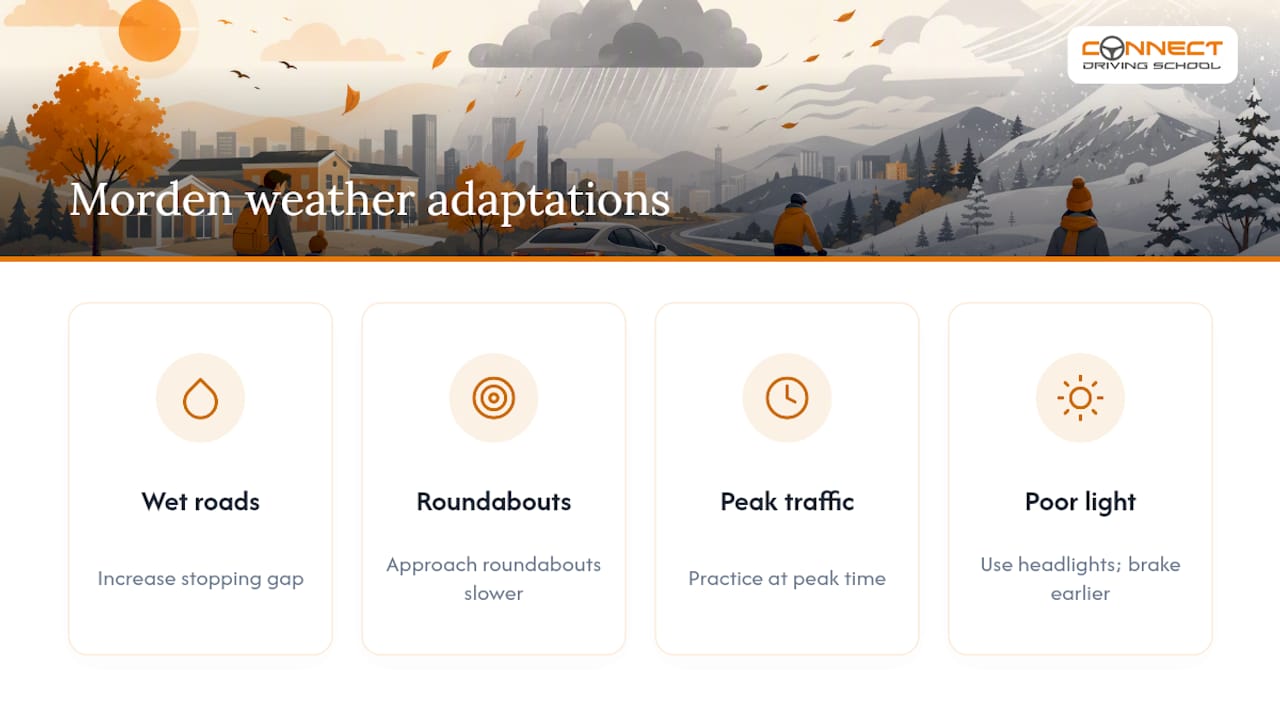
Morden’s road mix punishes weak weather adaptation harder than most test centres, mainly because the gyratory and Rose Hill’s spiral roundabouts get genuinely slippery in wet conditions, and visibility drops fast on York Road’s narrower stretches.
Rain changes your stopping distances everywhere, but it matters most at the Grand Drive double mini-roundabout, where the gap you’d normally take between vehicles needs to open up noticeably. Practise this deliberately rather than assuming you’ll adjust automatically on the day; a slower approach speed into a wet roundabout is a habit you build over several sessions, not something you remember mid-manoeuvre.
Rush hour around the A24 and A297 brings heavier traffic density than most learners expect on a weekday test slot. Bus lanes see more buses actually using them during morning and evening peaks, which raises the stakes if you misjudge whether one is active. If your test is booked for a peak time, try to get at least one practice session at the same time of day, since traffic behaviour around the gyratory shifts noticeably between 8am and 2pm.
Poor light in autumn and winter months adds another layer, particularly on the St Helier estate roads where parked cars already narrow your sightlines. Headlight use, earlier braking, and a slower general pace through residential stretches all count in your favour when conditions turn against you. Examiners factor in weather when assessing your judgement, so adapting visibly and early, rather than driving the same way you would on a dry, clear day, works in your favour rather than against it.
An instructor’s view on the final week before your Morden test
Spend your last week on targeted repetition, not general driving. Day one and two: lane discipline through the gyratory. Day three: bus-lane recognition drills. Day four: hill starts on Wool Road. Day five: a full mock test from Tudor Drive. If you make a mistake on test day, pause, breathe, and keep driving. One error rarely fails a test on its own.
— Mudassar
Ready to practise the actual Morden test routes?
Connect Driving School is the practical alternative to piecing together route notes from three different websites and hoping they add up. Lessons focus directly on the roads you’ll actually face, the Morden Hall Gyratory, the Grand Drive double roundabout, the bus-lane stretches, rather than generic driving practice you then have to translate onto local roads yourself.

Courses cover beginner lessons, intensive packages, Pass Plus, and motorway driving, in both automatic and manual, with pricing information available on the provider’s website. If you’re aiming for a Morden test date, book a lesson focused on the gyratory and bus-lane scenarios first, then request a full mock test starting and finishing at Tudor Drive so the opening minute of your real test feels familiar rather than new. Start with a driving lesson in London built around the roads your test will actually use.
Sources
Related Posts



Comments (0)